

Let’s talk about earworms -those obtrusive song fragments that lodge in your head and are difficult to rinse out. We recognise the feeling; even if you like the song, it’s stuck on replay and just won’t go away. It acts like an impish spirit like a nasty wasp buzzing around your head or an itch that is unreachable to scratch. They slip in sideways in the wallpaper of your mind at moments when you are doing something relative mindless like washing the dishes, brushing your teeth, or walking the dog. This experience is very common and few people have not experienced it at one time or other.
Long before earworms were ‘named’ and became the topic of analytical study by cognitive psychologists, playwright Noel Coward nailed it when Amanda in Private Lives says ‘Extraordinary, how potent cheap music can be’.
The quote is often remembered as starting with the word ‘strange’ or ‘funny’. The song in question is ‘Someday I’ll Find you.’ This encourages the two newly marrieds Amanda and Elyot who have new spouses to reminisce on what they’ve lost in the divorced partner. They meet across hotel balcony and the song acts as a trigger to the past. So, there is an element of wistful nostalgia here and whether Coward knew it or not it is an apt demonstration of the Venus retrograde effect. We are experiencing this right now while Venus is going backwards in Scorpio and Mercury is about to join her. It is the perfect time to rediscover makes me love letters from the past. But those could be just songs that trigger a flood of memories. Something in the words triggers an emotional response.
The words ‘cheap’ and ‘potent’ are relevant as it can be absurdly powerful and knock you temporarily off course exactly because it is unexpected.
Plus, it can be difficult to stop once it starts.

It even points to Marcel Proust’s discovery of the power of the madeleine sponge cake. This was where in his ‘river novel’ ‘A La Recherche du Temps Perdus’ each time he tastes a madeleine with tea, it has a ripple effect of memories spiralling him back to earlier times. That Proustian experience apparently started life as toast and not sponge cake but it can be anything at all that winds you back in time to relive another era. Songs definitely do this as they can define the zeitgeist. Smells can do it too.
Ear worms are not like ringworms or actual parasites. You cannot just apply an antifungal cream and hope it clears up in a few days. But the mental tape loop in our heads does have a tendency to follow the life of a invading thought. Helena Petrovna Blavatsky talked of ‘astral parasites’, thought forms that have energy that are floating around in the psychic airwaves. Egregores are of the collective variety but these hidden entities can still influence us against our will and so can ear worms.
Earworms are mostly catchy songs with easy melodies, a strong hook, or bridge and a memorable chorus. The lyrics tend to have that singalong quality so it can be a shared experience if you singalong with a friend. That song has clout and magically attributes real meaning to the time of your life when you first heard it. But they can be overly sentimental and you might not want to hear them again.
Apparently, the earworm happens primarily in the visual cortex with some activity in the auditory cortex. Studies show that this part of the brain fills in any gaps in songs- the words carry on, or the rhythm continues because the whole is memorised somewhere in the back of your mind. And the antidote is to play it through to the end. This may not work in certain cases where the song is extra powerful. Some , songs can penetrate beyond the normal reach of the ordinary earworm.
Queen’s Bohemian Rhapsody fits into this category. Whether you like it or not, this song can break through your defences. So be warned, if you play it, be ready to have the refrains and choral effects echo for hours, even days afterwards. The song may have remarkable artistry and elegance, but it is the sheer power of its heartfelt delivery by Freddie Mercury that whacks you in the core and leaves an imprint. Switch it off fast before it starts might be the best remedy here.
Why should this be? Is it due to the in-built strength and high drama of a song that makes it repeat longer in the mind? It’s certainly true of the most commonly heard ‘earworms’. They are instantly recognisable songs that everyone seems to know and like with easy lyrics. Or are they?
This list I made from a recent visit to Thailand names just a few. You may have your own list. But there are some surprises here. The Pointer Sisters ‘I’m So Excited’ is in there. I didn’t expect that. But it gets played a lot in bars. But then we notice that its sixties, seventies and eighties songs that predominate as if some countries are stuck in time.
Some songs become the favourite of drag queens. They are popular in the gay clubs. These contain a high drama overload and are emotionally wrenching ‘torch’ songs. That does tend to encourage quivering lips during the mimed performances.
And then there’s ‘I Will Survive’ by Gloria Gaynor which is a stomping anthem. It’s not surprising that both gays and straights claim it as their own. Gays love it because it validates their suffering and women love it because it strikes out for independence from men. One theory as to why this song is so popular in Thailand however is because Thai women so often feel disempowered culturally and economically and this song is a declaration of strength and survival that puts them back on track. Plus, the song has plenty of oompf, one could say ‘balls,’ and it’s easy to remember and sing along to- in other words, it’s a classic earworm.
The Bangkok Podcast has speculated as to why Thai people seem to love American soft middle-of-the-road rock so much? Why that and not any other genre? It cannot just be the effect of American GIs landing in Pattaya. Could it be, I wonder, that it’s more likely to be ensnaring the power of these songs to worm their way into the heads of unsuspecting listeners and find a home there? At least I was grateful that I did not hear ‘Hotel California’ by the Eagles as that song can stick in the mind in very annoying ways. But earworms don’t have to have ‘easy’ lyrics as the lines in the song are open to conspiratorial interpretation.
Also songs that start quietly that take time to build up with complex lyrics can also hit the top five earworms. Don McLean’s ‘American Pie’ is a great example. It’s only the chorus that holds a grip in the mind, but the lyrics are odd and eccentric, referring to the death of Buddy Holly ‘the day the music died’. The words are a selective history of American cultural references that most people in the rest of the world might have trouble understanding. Yet it’s a sing along stomper for karaoke lovers. Likewise ‘Zombie’ by the Cranberries is odd in this list referring as it does to an IRA attack in Norther Ireland. Yet it’s memorable with the tones of lamentation in Dolores O’Riordan’s voice.
Eye Worms and Knee Worms: the other varieties
Ear worms are primarily sound samples floating in your auditory field. But it’s not just sounds that do this. The phrase eye-candy is appropriate as visuals can be addictive too. They feed the eye which has a need to see just as the ear needs to hear. So, we have to include eyeworms in this phenomenon. Then there are even nose worms for smells- the olfactory worm and knee worms that make you want to dance.
What are they you might ask? A knee-worm has danceability worked into its DNA. It is a song that clicks in your knees and legs and makes you want to instantly get up and dance. Time Warp from ‘The Rocky Horror Picture Show is a classic of this type. It has the full audience participatory effect. But I felt that ‘pull’ of a song that when I lived in Barcelona in the late eighties. When Madonna’s ‘Get into the Groove’ came on, it had that effect of getting me up to dance even when I didn’t really want to. Was it the bass line, the drum beat? It didn’t matter. It made me want to dance.
 As for Eyeworms we are so enveloped in imagery swimming in them we barely notice how potent the images are. We can scroll through dozens and barely even notice how we are glued. The mind has a natural photographic ability to take snapshots and capture items in your ‘mind’s eye, a visualising power that could be related to the pineal gland. The social media effect of people’s love of vivid or startling photography has had a strange side effect of trivialising magnificent landscapes.
The classic one is KelingKing beach in Nusa Penida, Bali. Otherwise known as T. Rex beach, it is probably one of the most photographed beach-scapes at least in Bali, if not the world. Yes, Santorini is up there too but number one in Indonesia is KelingKing as it is genuinely spectacular. The problem of this is that its power as an ‘eyeworm’ attracts vast numbers of visitors and that beauty spot can then be overrun by tourists. Usually there is a long queue to get the right photo op with that stunning cliff in the background. The same goes for many such instantly recognisable photogenic landscapes. They picture can become more real than the actual location so they live larger in the mind.
Back to earworms: these repetitive song fragments are memorable by default. It’s not the same as listening to a song you’ve never heard before. Earworms are already embedded into the mould of your mind. I remember back in the days when the long-playing stereo was at home but I was on the bus and wanted to replay the music I loved. There were no I-Phones or computers. But the mind could be trained to replay a favourite track. It was possible because it was recorded into the auditory memory and could even have good accuracy.
Old style vinyl LPS, especially had a way of revealing the sensory qualities of the recording all laid in place by the sound engineers in the studio. All the subtle layers of sound like the bass line asymmetrically dancing with the vocal, or the acoustic strum light as a soft brush or some ethereal background vocals that only come to the fore if you truly listen deeply. Are we listening that deeply these days? I don’t know. But I am glad I grew up in the analogue world of the 1970s and had all that wonderful music to listen to. It can be claimed as part of my own life. It’s also why earworms have such a powerful effect. They are the songs that we’ve lived in like comfortable shoes.
 I would also add the outliers to the standard type of earworms. Virginia Plain by Roxy Music was an oddball single at the time in 1972. You might not think this could be an earworm as it came from left field. Its originality is that it starts with a fade-in not a fade-out as if it is back to front. So, when the first chord finally strikes the beginning, it stands out and that’s the bit that becomes the earworm fragment.
But we can ask are earworms dangerous?
A Literary Nightmare was a short story by Mark Twain written in 1876. He was often prescient in his musings and ahead of his time. The story details of how an advertising jingle worms its way into the mind of the protagonist and thus is posed as actually harmful. He even says ‘his head kept humming’. At the end of the story, he warns people against these ‘merciless rhymes’ and says to avoid them ‘as you would a pestilence’.
Twain makes this point about how insidious jingles can be where music and even rhymes are used to lodge in the memory. Perhaps the more insidious they are, the more effective they become in selling the product because it reaches the subliminal part of the mind. Advertising has great power as we know to our cost by being targeted by our phones that appear to be sneakily eavesdropping our thoughts.
Advertising can however trivialise all that is sacred and that reductive power should not be underestimated. It is well known now after Adam Curtis’ Century of Self (2002) documentary series that Edward Bernays developed this targeting of unconscious desires to make PR and advertising not just effective, but having a deadly accuracy and ability to control behaviour.
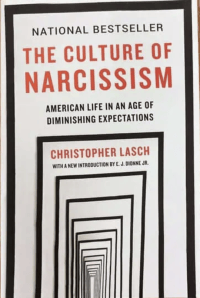 Historian and culture critic Christopher Lasch back in 1979 talked of the degradation of culture where high and low art are conflated and our deepest values are turned casually into commodities and where “Advertising serves not so much to advertise products as to promote consumption as a way of life.” This is how legendary pop songs can sadly become fodder to shift product from the supermarket shelves.
His analysis of narcissism in its modern form tends to be of the shallow and malignant variety and never healthy self esteem. It started then and has gotten much worse today in the social media bonanza that exacerbates mental health disorders.
So here is the darker side to the earworm phenomenon- where it entices secret services and intelligence agents to study it in case it can be used against enemies, real or imagined. It is of interest to MK Ultra style programmes which claim to have ceased operations, but have they really? The Manchurian Candidate (1962) proposed that a seed could be planted in someone’s mind that could be made to trigger unpredicted behaviours via kinetic associations. It could even lead to an assassination. This same theme was picked up in Christopher Nolan’s film ‘Inception’(2010) of seed planting in the mind by people trained to lucid dream.
We might think they earworms are innocent but anything that can be used to influence people’s minds on an industrial scale tends to become the obsession of governments or any sociopath who is eager to engineer social change.
Most people probably have a love-hate relationship with earworms. A song you love can become one you hate if it becomes a pest. They can be particularly insidious at key events of the year.
Who can erase Mariah Carey’s All I want for Christmas out of their heads once they’ve heard it? Or worse- depending on your taste- Slade’s ‘Merry Christmas’.
Try as hard as you might, once these songs enter, they are in for the day. Think of the Paul McCartney song- you know the one I mean. I don’t even need to mention the title.
Halloween is coming too so prepare to hear Frank-n-Furter’s ‘Sweet Transvestite’ in all the venues across town as people try to copy-cat his antics. But they fall short as there is only one Frank-n-Furter for all time and that’s Tim Curry who’s entrance in the film and sheer swagger is now legendary. Or, make way on the street for the funky rhythms in the opening part of Michael Jackson’s Thriller for the Zombie walk not just in Greenwich Village, New York but all over the world as people dress up as zombies for charity fundraising. The earworm has done its job here and become cult phenomena of a collective type.
But at their best they represent the finest and best of popular music, and are rightfully treasured as ‘great’ or ‘classic’ songs, but there is a danger they are too much and can be like militant little intruders into our minds, especially if they come in at odd moments when we least expect. When we start to hear them outside your head is when you may need to seek help. But like a DJ, you can overlay one song by another to push the first one out. Use the Virginia Plain trick -fade in and fade out. We have instant replay of the mind. If it is switched on, it can be switched off.
Ear Worms are here to stay and point to a secret power of the mind that might easily atrophy if we forget to use it well.
© Kieron Devlin, October 11th, 2026
All sources in Hyperlinks
Reflections image Freepik.com
Photo of KelingKing Beach© by Kieron Devlin, 2023
Photo of Corridor in Best Guest House, Hua Hin © by Kieron Devlin, 2026

