
1: Things Fall Apart
2: In Search of the Unrequited
3: The Eros Connection
4: The Battle of Blythe Road
5: Yeats’ marriage to George Hyde-Lees
1: Things Fall Apart
‘Things fall apart. The centre cannot hold’ can mean to us that something darkly weird is happening out there and we feel that on a visceral level. The words just aptly describe that complex feeling. They are from one of of W.B. Yeats’ most famous poems ‘The Second Coming’ (1919). He might have been talking about the implosion of empires, the shifting of the aeon, or just plain old entropy. He does not define its meaning as much as hint at the darkness folding in.
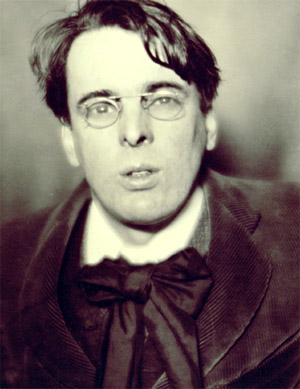
He was was educated both in London and in Dublin so he was both Anglo and Irish which suits a Gemini very well to play off both sides. It could be a bit of both for me being Anglo-Irish as I too have not written about Yeats before, yet I had many times intended to. He has been in my peripheral vision somehow all my life waiting to be acknowledged. So, what better time than to celebrate his birthday June 13th, although he was born in 1865 in Dublin- a true Gemini, who gave poetry his finest shot and who crafted lines so memorable they have outlasted him.
He was in danger of becoming unfashionable for a while but his currency keeps coming back into view. This poem particularly lodged in people’s minds and even Joni Mitchell was inspired enough to set it to music in two versions: a jaunty rhythmic version in 1991 and then in 2016 she reworked it with full orchestral treatment as Slouching Towards Bethlehem. This version gives it more of the apocalyptic tone it deserves. But it could be rendered in several different ways – even a Heavy Metal style. It also establishes Yeats’ pop culture credentials- his lines of poetry pop up in films like ‘No Country for Old Men’ and ‘Equilibrium’ as to represent the power of the imagination to counter difficult realities.
Other lines from ‘The Second Coming’ people most often cite like ‘mere anarchy is loosed upon the world’ have entered the common lexicon. Rather than poetry being ‘emotion recollected in tranquility’ as Wordsworth proposed, the best of Yeats poetry are lines that reflect the serenity at the heart of the storm, wrenched out of turmoil, bristling with symbolic resonance-at times like 9/11 and this past 3- year period when the world doubts itself and feels wobbly. These words of ‘The Second Coming’ register the psychic turmoil of the times. The images that emerge from the ‘spiritus mundi’ -otherwise known as the collective unconscious -and from Yeats’ pen could be a tad dramatic, even fearful. Yeats was tuned into the zeitgeist more than most people and may even have acted as midwife to the birth of Ireland as a republic independent of England.
Uranus comes in as the magician for him gifting him with the power of articulation-he is the word juggler. He did actually leave a recording of Lake Isle of Innisfree in his own voice and it shows that he wanted his verse to be intoned in a trembling, vibrated manner much like invocations in Golden Dawn rituals. The words were to be read as though they could “unite the sleeping and the waking mind”.
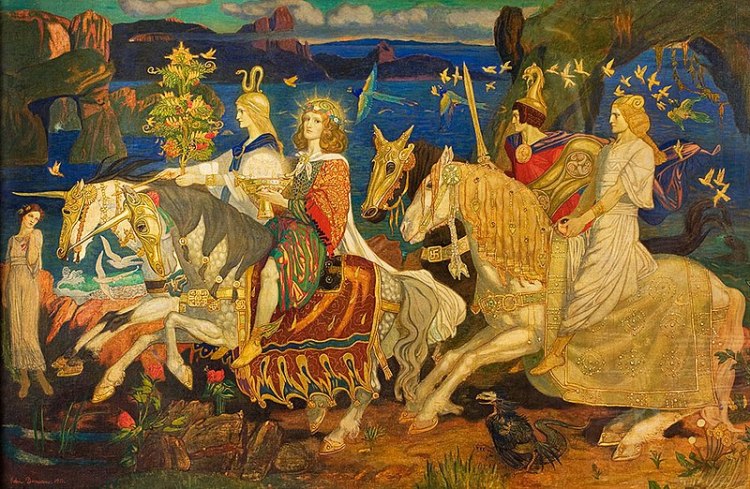
He was after all also a magician- people said with ‘glittering eyes’. He studied Hermeticism and Egyptian magic in the Golden Dawn. He even created rituals to fit the mythology of the Tuatha dé Danann, the gods of pre-Christian Ireland. Words are the province of Mercury and his Mercury is in Gemini, a sign ruled by Mercury, along with Uranus, which the higher octave of Mercury at 29° so giving its full expression of vision and insight.
I often look for a conjunction of Venus and Mercury for poets and song writers who create ‘sweet words’. He does not have those planets twinned together, but Venus is strong in Taurus which it rules, and in the 3rd house of communications, ruled by Mercury. This would add that extra smoothness to the words, to beautify them in a way and allow them to flow naturally. His Venus is incidentally conjunct asteroid Sappho, the tenth muse the first poet to write a highly ‘intimate’ love poetry which I find very telling. For a poet to have this on his Venus is rich. While we have touched on asteroids- the chief Muse asteroid, who was a stand in for Mercury, Calliope is conjunct the Great Attractor at 11° in Sagittarius. This point in the chart is about sucking in energy like a vortex and perhaps it gave him a fertile and magnetic mind; he was never short of ideas which flooded in from somewhere. But he also has a Kite formation with Jupiter at the apex giving wind to the sails of his reputation.
 The Countess Cathleen was a play in verse he wrote which was first published in 1892 and performed some years later. It kicked off a new type of play for the ‘Irish’ theatre- much more lyrical than the then fashionable realism of Ibsen which was then shocking the west end of London. The characters in Countess Cathleen are like mouthpieces for archetypes and he had no problem making them sound like disembodied voices floating in and out of a metaphysical and ahistorical space, and that creates a solemn, visionary atmosphere.
It was controversial as the Cathleen openly sells her soul to the Devil posing as ‘merchants’ (again a reference to his strong Mercury, in this case posing as tricksters) in order to save Ireland and the Irish people. The church cried ‘heresy’ but it got attention. This eventually lead to the support of Lady Gregory and the establishing in 1904 of a return to ‘ancient idealism’ with plays performed at the Abbey Theatre in Dublin.

This is where many would part ways with Yeats and say he believed in mumbo-jumbo, and he has often been dismissed by many critics for that reason – his belief in magic. But you cannot understand him or his work fully without knowledge of the poetry, the ritual magic from which most of it was inspired, and with the astrology and understanding of alchemy which can illuminate the hidden areas and help confirm what happened where there is some doubt.
He said himself that ” If I had not made magic my constant study, I could not have written a single line….The mystical life is at the centre of everything I do, and all that I think and all that I write.” So that matches him up with his greatest inspiration, William Blake, the ultimate visionary who combined mysticism with poetry and painting.
Jupiter and Uranus are opposed: Jupiter is strong in domicile in Sagittarius squatting as the guru in lotus position, and Uranus is in Gemini in the creative 5th House at that thorny degree acting as the arch sceptic. This throws light on his choice of motto in the Golden Dawn which was ‘Demon est Deus Inversus‘ -The Devil is God Inverted. He loved a battle and an intellectual debate seeing beyond the obvious polarities. He was forever looking for oppositional modes to resolve in the way that Jung later proposed that leads to personal growth and individuation and to show that at the deepest level, what appears in opposition are reverse sides of the same coin. Yeats and Jung studied the same source texts.
But he also had Saturn in Libra sextile Jupiter in Sagittarius, which is a very supportive connection. Saturn can be akin to death and restraint and Jupiter to life and expansion, so to have them working together is a kind of harmonious fusion of opposite impulses. It is hard to say which may have been stronger, with Jupiter resplendent in its own sign, and Saturn exalted in Libra, giving keen judgment and measure. His Saturn was also conjunct his North Node pointing out his direction in life to eventually bring balance to his relationships. But that is true of Saturn, it took a while to achieve
2: In Search of the Unrequited

The often cited story about Yeats is of his ‘unrequited’ affair with Maude Gonne and what that meant for him. So, let’s see what in his astrology points to this state of confusion, this intense and prolonged malingering for love. Venus is conjunct Pluto in Taurus for starters means he likes love with some prevarication or even manipulation, never the tamer kind. It’s an all-or-nothing kind of energy very intense for the lover and beloved, and in Taurus, ultra possessive.
He was known to desire Maud Gonne who flirted with him and may have considered him for a potential husband, but never committed. She turned down his marriage proposals repeatedly. This is enough to cause a sense of depression and defeat.
He had a soulful, sensitive Chiron in Pisces, but it was square to Jupiter and the Sun, where any hurt or wounding would be inflated and taken as a personal affront.
The words of his poem ‘ He wishes for the Cloths of Heaven’ (1899) expresses this very well as Chiron is about acute vulnerability and Pisces about the feet:
“But I being poor, have only my dreams;
I have spread my dreams under your feet;
Tread softly as you tread on my dreams.”
Yeats suffered feelings of rejection – that much is known, but what is less known is that Gonne had her reasons. She was a fiery Sagittarian, an impassioned political speech maker, the icon of the Irish feeling to rise up against the English, even though she was born in England.
She was, as Greer’s 1995 book reveals, already in love with a Frenchman, and what’s more, had had a child by him, but kept her lover Millevoye and child a secret from prying eyes in England and Ireland.
Maud abhorred any scandal. Yeats only learned of it later when she finally confessed to him when she was ready. But by doing that she became to Yeats less ‘unobtainable,’ less idealised, and in that twisted way desire has when it rules over us, the distance between them increased and he held off from any physical consummation. The sidhe (spirits) they say can create torment in the life of a poet.
They were however indulging in sex on the ‘astral plane’ a conjoining in the imagination as it were. Triangle situations very much suit the Gemini temperament which plays easily with multiple options. Maud eventually married Major John McBride who was executed in 1916. She later even referred to being a bit of dark muse to Yeats – the type of doomed sidhe that he wanted with that Venus conjunct Pluto- when she said that posterity would thank her for rejecting him so much, as it stimulated the writing of great poetry. He dedicated many poems to her.

Her Moon in Cancer was on his Sun in Gemini, across signs, but also her Sun at 29° of Sagittarius was on his Jupiter at 24° which straddles the Galactic centre. This is powerhouse energy for political tirades and revolutionary fervour, the ability to change the world for sure, as leader of the people, but where they personally clashed and shifted positions quickly in relation to each other is that they had a striking opposition- both had planets at 29° the ‘difficult’ degree Yeats’ Uranus culminating the end of Gemini and Maud Gonne’s Sun culminating at the end of Sagittarius at the same degree. It was a lesson in ‘endings’ or even false beginnings for them both and no doubt yet also a true inspirational force.
3: The Eros Connection
Yeats was to be one of those treated by the gods to long suffering relations, i.e. the hard knocks of love, as he had a conjunction of Eros and Psyche in the earthy sign of Taurus so his desires were very real. Eros in this sign represents pure Epithemia.
This sensuality I think turns up in his choices of words and phrases in his poems which make the images he conjures very real, the way they are crafted, as though directly drawn from lived – and deeply savoured – experience. But this conjunction might also suggest that someone is in love with love itself rather than the person to whom love is offered. It is the natural mingling of the divine coming down to earth and the human element in love aspiring to the divine above and beyond all the suffering.
So perhaps with all that combined the need for others was less fulfilling than the love already complete within himself. Her Eros/Jupiter in Aquarius was opposite to his Mars in Leo and that suggests all the sexual frisson, even if mostly unrequited. With Eros conjunct Jupiter that could have been words of love expressed in a somewhat overblown manner.
In the composite chart (made of all the midpoints) it suggests that their love defaulted to their spiritual practices and it is true they did a lot of ritual work together, channeling imagery and connecting telepathically. The Sun is in Pisces five degrees from Eros so the incentive was there to keep up his hopes and give love that idealised sense of Eros in a spiritualised flavour. But Chiron is also there with the Sun and Eros and the lesson was to bear the wound of loss and rejection, what must have been an acutely sore point for both of them and an area of much frustration.
4: The Battle of Blythe Road

This is a lesser known incident in Yeats’ life but one that deserves attention. 36 Blythe Road in London became the home of the Golden Dawn where they had their temple rituals. Actress Florence Farr was then in charge. (More on her in my next post). But troubles were brewing for McGreggor Mathers the absent leader of the order. He lived in Paris and there were rumblings of mutiny to his authority which had become both remote and autocratic. The whole thing is complicated by other scandals going on about the authenticity of the source material for Golden Dawn rituals, and by 1900 the Golden Dawn was in a disintegration and splintering phase.
But this particular day stands out as ripe for dramatic cinematic treatment. Stories can be overblown and gain in the retelling. Perhaps the phrase ‘threw him out’ physically is one way of putting it, but refused entry another, much less exciting. There are different versions. Possibly it was a damp squib. But few apart from Greer have checked the astrology of this day when Yeats was pitted against a rival- the young upstart in the Golden Dawn- Aleister Crowley.
Yet it is all very revealing of the energetic forces railed in opposition to each other. Yeats detested Crowley only as fellow air-signs can, a Gemini to a Libran, with all his mental strength, and Yeats felt he was a better poet which Crowley did not like. Yeats called Crowley ‘unspeakable’ and the ‘despot Mathers’ ‘favourite lad’ sent from Paris in revenge for the mutiny against him.
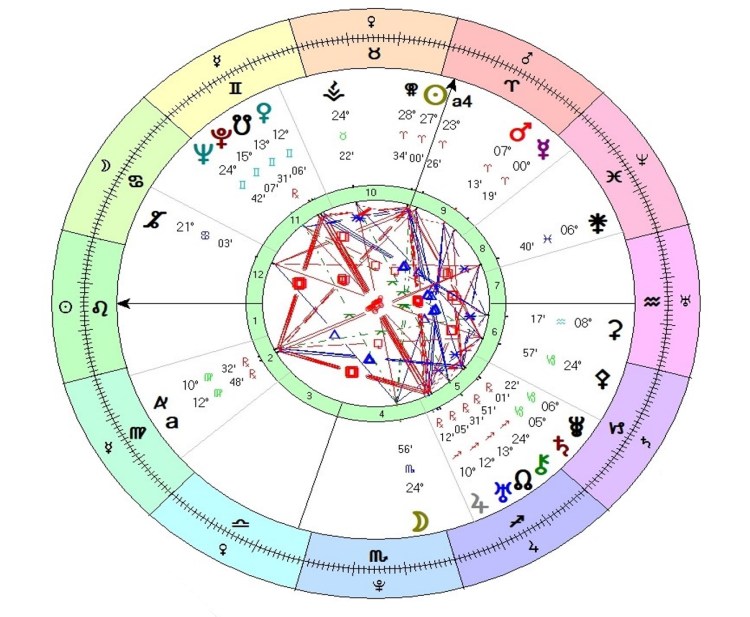
As to who was the more powerful magician is another story. In the synastry chart, Crowley’s Uranus was on Yeats’ Mars. Crowley’s Saturn was conjunct Yeats’ Aquarius Moon. But Yeats’ Libran Saturn/North Node was conjunct Crowley’s Sun/Venus in a kind of reversal. Yeats’ Sun was also square to Crowley’s Pisces Moon. They had both progressed speedily up the ranks of the adepts, but there was ten years difference between them and it was instant dislike.
Some in the order felt that Crowley had advanced superfast under the wing of Mathers and that was wrong somehow. He was seen as a dangerous upstart, a rule breaker plus he was someone who had an eye for the theatrics in any situation. Rumours of sordid behaviour surrounded him. Florence Farr was involved as she had just resigned because of Mathers, and she sided mostly with Yeats against Mathers and Crowley.
Crowley turned up that day April 21st, 1900 in full highland regalia, wearing a black mask and carrying a gilt dagger on his waist. He entered the vaults and sealed the exits. Crowley asked the secretary for his official papers confirming his status. Yeats was there but ejected him, and called the police. Crowley went off having made his point. It was more of an incident than a battle and it was not the only mutiny going on against Mathers’ autocratic rule. A woman called Madame Horus had faked being an adept and had stolen his secret papers. The Blythe Road incident is however an event with an exclamation mark in the history of magic.
It signalled the end of the Golden Dawn. The astrology shows clearly something was ‘up’ in the skies. A powerful opposition opposites, exactly what they were all claiming to overcome. Some said dark forces and curses were at work here and no doubt they used what tools they could. Both the Sun and Mars were in Aries, fast acting and impulsive The Moon was in Scorpio, hiding its real feelings. Pluto, the South Node and Venus all in Gemini were aligned together against Uranus, Jupiter and the North Node all in Sagittarius. This is the axis of higher and lower knowledge and learning, philosophies and beliefs, and supposedly ‘wisdom’.
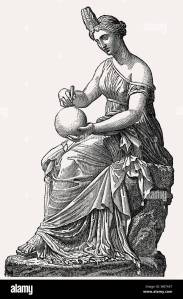
What stands out for me is that asteroid Urania representing the study of astrology and magic is square to this mega polarity of Venus Pluto and the nodes reigned against Jupiter, Uranus and the node over in the sign of Virgo. So it is Urania that is the apex of the T-square. If ever a chart is descriptive of an alleged battle for the future existence of a Magical order, it is this chart. This is what makes me feel that while on the surface it was a minor dispute, on the psychic level it was really a genuine battle of forces for control (Pluto) over the ownership of knowledge (Jupiter-Uranus ) and that perhaps it was astrology (Urania) that they should have consulted for an easier and much wiser timing and resolution to the impasse. But this is the value of hindsight and while it ended then, nevertheless the influence of the Golden Dawn is still increasing.
5: Yeats’ marriage to George Hyde-Lees

While Yeats and Gonne may have oscillated back and forth where the Saturn in Libra allowed him to see the seriousness in relationships in a measured way, hence why he hesitated to commit for so long, and felt tortured by Maud Gonne, but when he did finally decide to tie the knot with Georgie Hyde-Lees, a Libran, in 1917 it was long-lasting. He even ‘elected’ the time of the wedding by drawing up an astrological chart while his progressed Sun was in Leo.
George Hyde-Lees was born with that baleful Pluto-Neptune conjunction in Gemini in 1892 and that possibly accounted for her abilities as a trance medium and even her alcoholism. This conjunction had a distorting effect, bringing out whatever was dark and hidden in all it touched. In the synastry chart for them as a couple, this conjunction radiated on his Sun as did her Sun-Mercury in Libra on his Saturn-North Node. This would have established a powerful connection: husband and wife, writer and scribe.
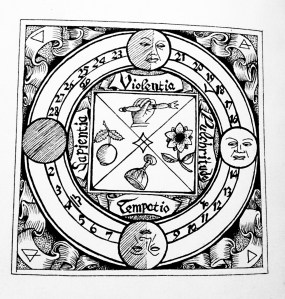 As a spirit medium Georgie and Yeats produced ‘A Vision’ (1925) a book of mysticism and esoteric lore tracking the long journey of the Moon through all its phases. Yeats used a 28-day system unlike that of Dane Rhudyar. George edited it (Mercury) adding and amending content many times even after Yeats had passed. But Yeats mother it was said passed on her psychic gifts to him as well and she would be represented by the Moon on the cusp of his 4th house.
Yeats died in 1939 on the French riviera on the eve of the WWII when in his words the beast really did slouch towards Bethlehem to be born and the darkness was unleashed.
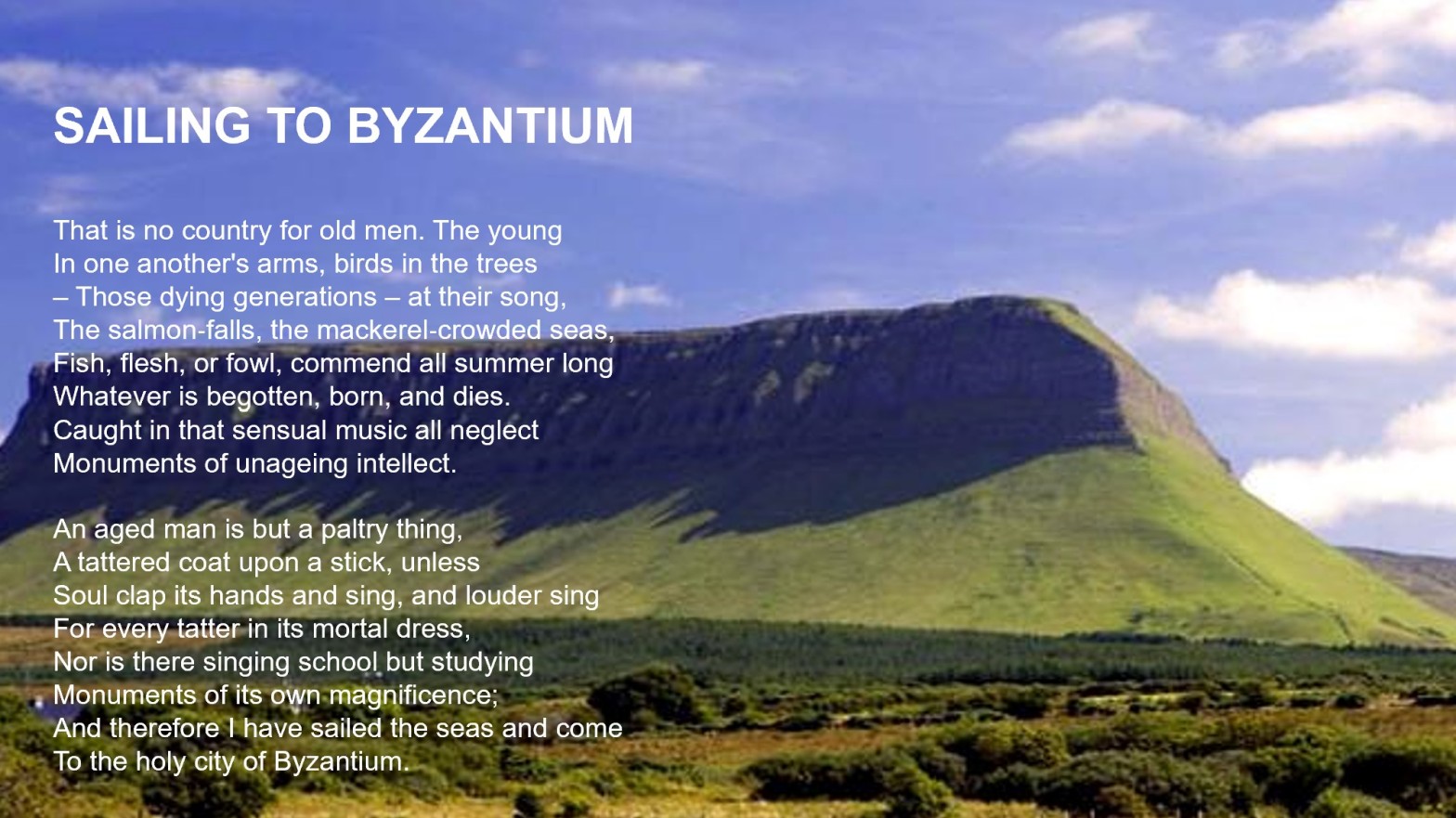
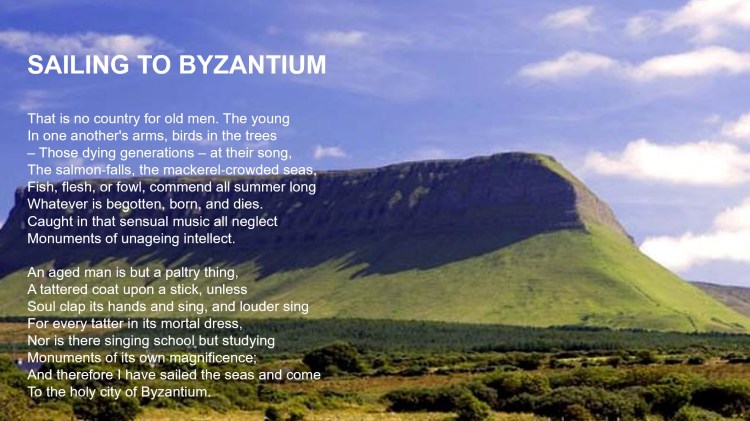
He was buried in the foothills of the table top mountain of Ben Bulben in County Sligo. While Yeats may have been somewhat earnest and lacked a sense of humour, he could pen a great poem crafting words like a sculptor carves stone, and has earned his place as an outstanding poet whose words still resonate loud for those with the ears to hear them.
© Kieron Devlin, June 13th, 2023, All Rights Reserved
References
Greer, M. K. (1996) Women of the Golden Dawn: Rebels and Priestesses, Rochester: Park Street Press.
Image Credits: from Wikimedia Commons in the Public Domain
Kieron is a London-based and trained astrologer at Proteus Astrology on Facebook and his home page: #
Also on Instagram and Twitter Gab, Telegram, Patreon, MeWe. and Tumblr Bitchute, Rumble and Odysee
Natal Chart Readings via Skype or Zoom.
Book a chart reading: Eusastro@protonmail.com
Astrology can help you to understand:
- life patterns, purpose and life path
- relationships, business and romantic
- money, and what it means to you
- career issues
- personal and spiritual development
- vision, hopes and wishes
- choices and decisions
- planning for the future
- health and well being, aligning your energies
- stimulating creativity
- the best places to travel and live
 Proteus Astrology